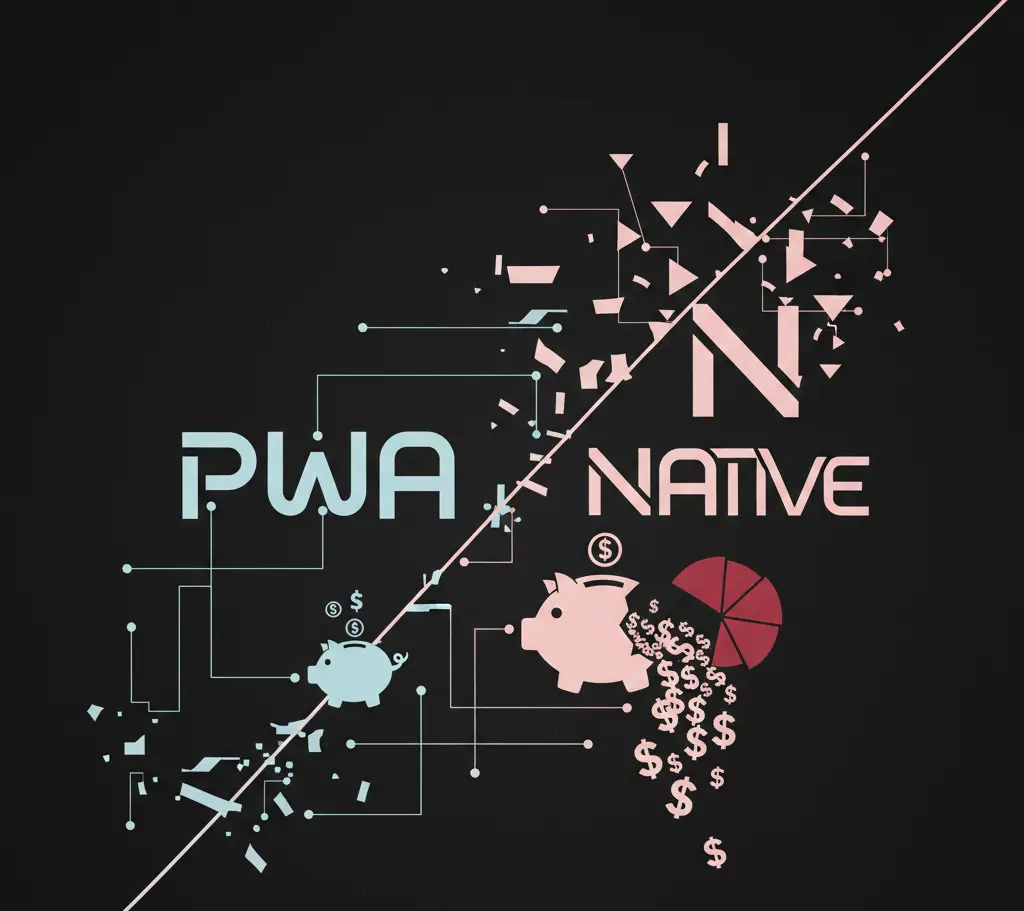
1. Native Apps: The Performance Gold Standard with a High Price Tag
Native applications are built specifically for a particular mobile operating system (iOS or Android) using platform-specific programming languages (e.g., Swift/Objective-C for iOS, Kotlin/Java for Android) and development tools.
Advantages of Native Apps:
-
Superior Performance: Optimized for the specific OS, offering the fastest performance and smoothest animations.
-
Full Device Feature Access: Can leverage all device hardware capabilities (GPS, camera, accelerometer, contacts, etc.) without limitations.
-
App Store Presence: Available for download through official app stores (Apple App Store, Google Play Store), offering discoverability and trusted distribution.
-
Rich User Experience: Can deliver highly sophisticated, graphically intensive, and offline-first experiences.
High Development Costs:
The power of native apps comes with a significant cost. Developing for both iOS and Android requires two separate codebases, two distinct development teams (or a larger team with dual expertise), and separate design, testing, and maintenance cycles. Each platform has its own guidelines, approval processes, and update cycles, multiplying the effort and expense.
2. PWAs: The Cost-Effective, App-Like Challenger
Progressive Web Apps are essentially websites that are built with modern web technologies but deliver an app-like user experience. They can be "installed" to a user's home screen without going through an app store and can work offline.
Advantages of PWAs:
-
Single Codebase, Cross-Platform: Developed once using standard web technologies (HTML, CSS, JavaScript) and deployed across all platforms (web, iOS, Android), dramatically reducing development effort.
-
Lower Development Costs: Eliminates the need for separate teams and multiple codebases, leading to significantly lower initial development and ongoing maintenance costs.
-
No App Store Hurdles: Bypass app store submission processes, review times, and associated fees.
-
Instant Updates: Updates are deployed directly to the web server, making them immediately available to users without app store approvals.
-
SEO Discoverability: As web applications, PWAs are discoverable by search engines, enhancing visibility.
-
App-like Experience: Offer features like offline access, push notifications, and home screen installation, blurring the line with native apps.
3. The 40% Budget Loss Trap: When the Choice Goes Wrong
The "40% budget loss" often occurs when businesses choose native app development for both iOS and Android when a PWA would have sufficiently met their primary needs. Here’s how the budget drains:
-
Duplicate Development Efforts: The most significant factor is building essentially the same application twice – once for iOS and once for Android. This duplication of effort for design, coding, and testing can easily inflate development costs by 50-100% compared to a single PWA codebase.
-
Increased Maintenance & Updates: Native apps require continuous maintenance, bug fixes, and updates for each platform. Every operating system update, security patch, or new device resolution means potentially double the work. This ongoing cost significantly compounds the initial overspend.
-
Larger Teams & Specialized Skills: Native development necessitates hiring or contracting specialized iOS and Android developers, which are often expensive resources. A PWA can typically be built by a single, albeit skilled, web development team.
-
App Store Fees & Marketing: While not development costs per se, app store submission fees, developer accounts, and the effort required for app store optimization (ASO) add to the overall budget, which PWAs avoid.
-
Delayed Time to Market: Developing two native apps takes considerably longer than one PWA, delaying market entry and potentially incurring higher opportunity costs.
For a business whose primary need is content delivery, e-commerce functionality, or basic interactive services, a PWA can often achieve 80-90% of the desired functionality at a fraction of the cost, often cutting initial development expenditure by 30-50% compared to dual native app development. When the decision leans native without a compelling reason, that "extra" 40% (or more) is directly absorbed by the unnecessary overhead.
4. Key Factors Driving the Cost Difference
-
Technology Stack: Native apps use specific, often proprietary, languages and SDKs (Swift/Kotlin). PWAs use universal web technologies (JavaScript, HTML, CSS).
-
Platform Fragmentation: Native deals with two distinct, rapidly evolving platforms. PWAs offer a unified web standard.
-
Distribution: Native requires app stores with their rules and fees. PWAs are distributed via web browsers.
-
Hardware Access: Native has full access; PWA access is limited by browser capabilities, though constantly expanding.
5. When Native is Justified
Despite the cost implications, native apps are indispensable for certain use cases:
-
Heavy Graphics & Gaming: Applications requiring intense graphical rendering and complex animations.
-
Deep Hardware Integration: Apps that heavily rely on unique device features (e.g., augmented reality, complex sensor data processing).
-
Offline-First Criticality: Scenarios where guaranteed robust offline functionality is absolutely paramount (though PWAs have made strides here).
-
Specific App Store Ecosystem Benefits: If discoverability within app stores or specific in-app purchase mechanisms are central to the business model.
6. Making the Right Choice: Prioritizing Business Needs
To avoid the budget trap, businesses must meticulously assess their needs:
-
Required Features: List all essential functionalities. Can a PWA achieve most of them?
-
Target Audience: Are users comfortable with web experiences, or do they exclusively expect native apps?
-
Performance Expectations: What level of speed and responsiveness is truly critical for the core user experience?
-
Budget & Timeline: What are the financial and time constraints?
-
Maintenance & Scalability: How will the app evolve, and what are the long-term support implications?
Conclusion: Smart Investment Over Blind Adoption
The choice between a PWA and a native app is a strategic business decision, not merely a technical one. Blindly pursuing native app development for both platforms without a clear justification often leads to the "40% budget loss" syndrome, where resources are squandered on duplicated efforts and unnecessary overhead. For a vast array of business needs, a Progressive Web App offers a powerful, performant, and significantly more cost-effective solution, allowing companies to deliver value quickly, iterate efficiently, and conserve vital development budgets for what truly matters: innovation and business growth. The smart investment lies in aligning the technology choice with genuine business requirements, not just perceived prestige.